Learn Fruits in French | Vocabulary list with pronunciation
We embark on a mouthwatering voyage through the world of French fruits, celebrating every morsel as an ode to the abundance of nature. In France, fruits abound, tempting the senses and enriching culinary customs, from the sun-kissed orchards of Provence to the verdant vineyards of Bordeaux. We enjoy the wide range of flavors, colors, and textures as we delve into the vocabulary of French fruits.
Key Takeaways
- Learning fruit names in French helps you express yourself better in daily conversations, especially while discussing food, cooking or grocery shopping.
- The blog explains tree fruits and stone fruits in French, helping learners understand commonly used vocabulary for peaches, cherries, apricots and similar items.
- It also covers citrus fruits and berries, offering useful words for oranges, lemons, strawberries, blueberries and other frequently used categories.
- French fruit vocabulary includes many tropical and exotic varieties, giving learners a broader range of words for diverse food situations.
- Practising these fruit names regularly builds stronger recall and helps learners feel more confident while speaking or reading anything related to food.
What Are Fruits in French?
In French, the word for fruit is “Le fruit”. Like all French nouns, fruits also have grammatical gender, either masculine or feminine, which determines the articles and adjectives used with them. This article is categorized into various groups of fruits to help you master the essential terms and their proper usage.
The categories are as follows:
- Common Fruits in French – Les Fruits Communs
- Tree and Stone Fruits in French – LesFruits d’arbres et à noyau
- Citrus Fruits in French – Les Agrumes
- Berries Fruits in French – Les Fruits Rouges
- Exotic Fruits in French – Les Fruits Exotiques
- Tropical Fruits in French – Les Fruits Tropicaux
Common Fruits in French – Les Fruits Communs
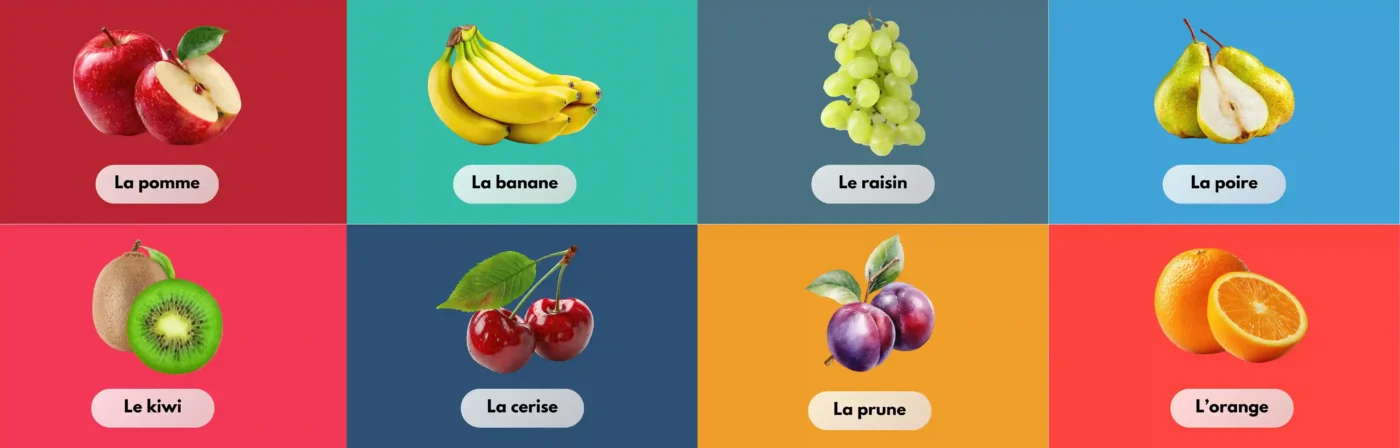
Common fruits are the foundation of everyday French vocabulary. Understanding them helps us to read labels in grocery stores and menus with ease. Whether you are shopping for a crisp pomme or ordering a refreshing jus d’orange, knowing these gendered terms and their right pronunciations is the key to effective communication.
| French | English Translation | Pronunciation |
| La pomme(f) | Apple | /pɔm/ (pohm) |
| La banane(f) | Banana | /ba.nan/ (bah-nahn) |
| Le raisin(m) | Grape | /ʁɛ.zɛ̃/ (reh-zañ) |
| La poire(f) | Pear | /pwaʁ/ (pwahr) |
| Le kiwi(m) | Kiwi | /ki.wi/ (kee-wee) |
| La cerise(f) | Cherry | /sə.ʁiz/ (suh-reez) |
| La prune(f) | Plum | /pʁyn/ (prewn) |
| L’orange(f) | Orange | /lo.ʁɑ̃ʒ/ (loh-rahñzh) |
Tree and Stone Fruits in French – Les Fruits d’arbres et à noyau
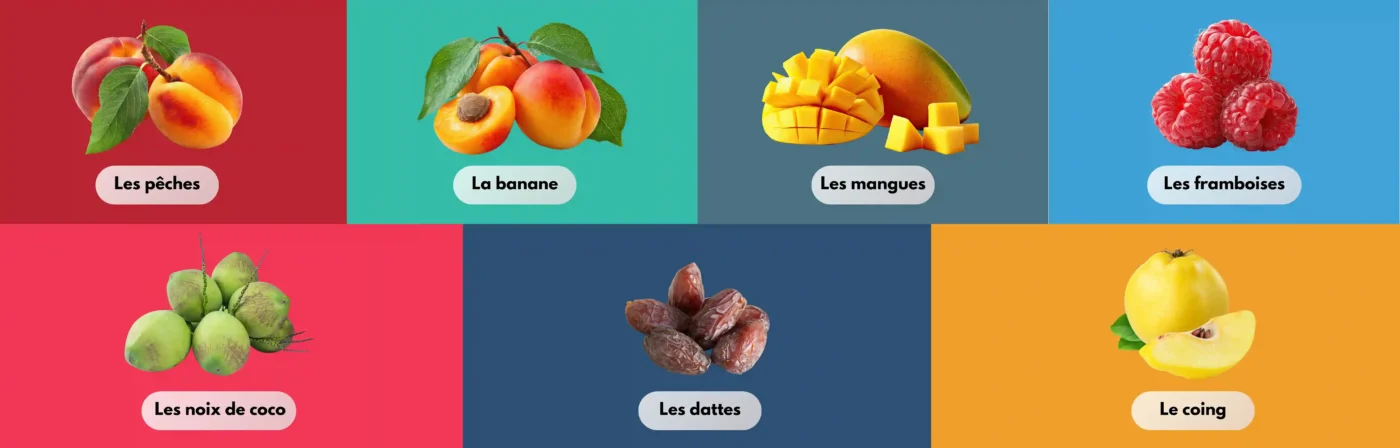
Tree and stone fruits, constituting the rich array of flavors found in French cuisine, grow in orchards all over the nation. These fruits are distinguished by either growing on trees or having a hard, stone-like pit inside. Such as the rich tartness of plums, the tropical allure of mangoes, and the brilliant blast of flavor from cherries.
They are well-known for their adaptability, appearing in a wide range of culinary preparations. From savory meals like salads and sauces to sweet treats like tarts and compotes. Tree and stone fruits are prized in French cooking for their sweetness and nuanced flavors, enhancing food preparations.
| French | English Translation | Pronunciation |
|---|---|---|
| Les pêches | Peaches | /pɛʃ/ (pehsh) |
| Les abricots | Apricots | /a.pʁi.ko/ (ah-pree-koh) |
| Les prunes | Plums | /plym/ (plewm) |
| Les mangues | Mangoes | /mɑ̃ɡo/ (mahn-goh) |
| Les framboises | Raspberries | /fʁɑ̃.bwa.z/ (frahm-bwahz) |
| Les noix de coco | Coconuts | /nwa də ko.ko/ (nwah duh koh-koh) |
| Les dattes | Dates | /dat/ (daht) |
| La poire | Pear | /pwaʁ/ (pwahr) |
| Le coing | Quince | /kwɛ̃s/ (kwehns) |
| La pomme | Apple | /pɔm/ (pohm) |
Expand your French vocabulary with our comprehensive guide to 50 vegetables in French, perfect for everyday conversations.
Citrus Fruits in French – Les Agrumes
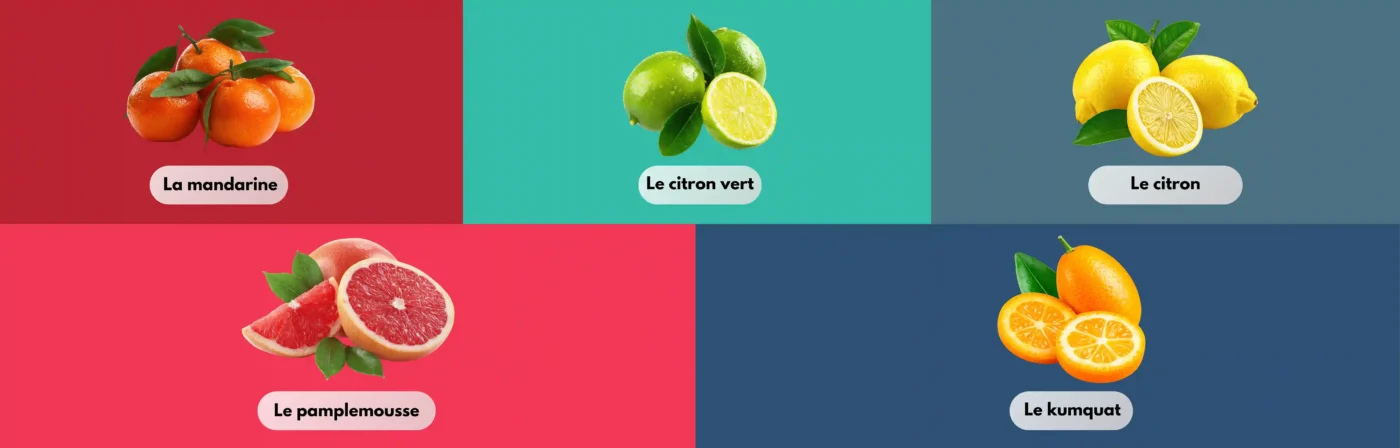
In French cuisine, beloved fruits from citrus trees originate from orchards throughout the country. This colorful group includes oranges, tangerines, lemons, limes, grapefruits, and kumquats, each contributing a distinct zest. Beyond serving as the perfect after-dinner snack, chefs use these fruits in a variety of French dishes. Citrus fruits infuse dishes with a vibrant aroma and dynamic acidity. Chefs juice them for refreshing drinks, zest them to highlight French desserts or marinate them to tenderize meats.
| French | English Translation | Pronunciation |
|---|---|---|
| L’orange | Orange | /ɔ.ʁɑ̃ʒ/ (oh-rahnzh) |
| La mandarine | Tangerine | /mɑ̃.da.ʁin/ (mahn-dah-reen) |
| Le citron vert | Lime | /si.tʁɔ̃ vɛʁ/ (see-troh vehr) |
| Le citron | Lemon | /si.tʁɔ̃/ (see-troh) |
| Le pamplemousse | Grapefruit | /pɑ̃.plə.muːs/ (pahnp-luh-moos) |
| Le kumquat | Kumquat | /kum.kwa/ (kum-kwa) |
Berries Fruits in French – Fruits Rouges
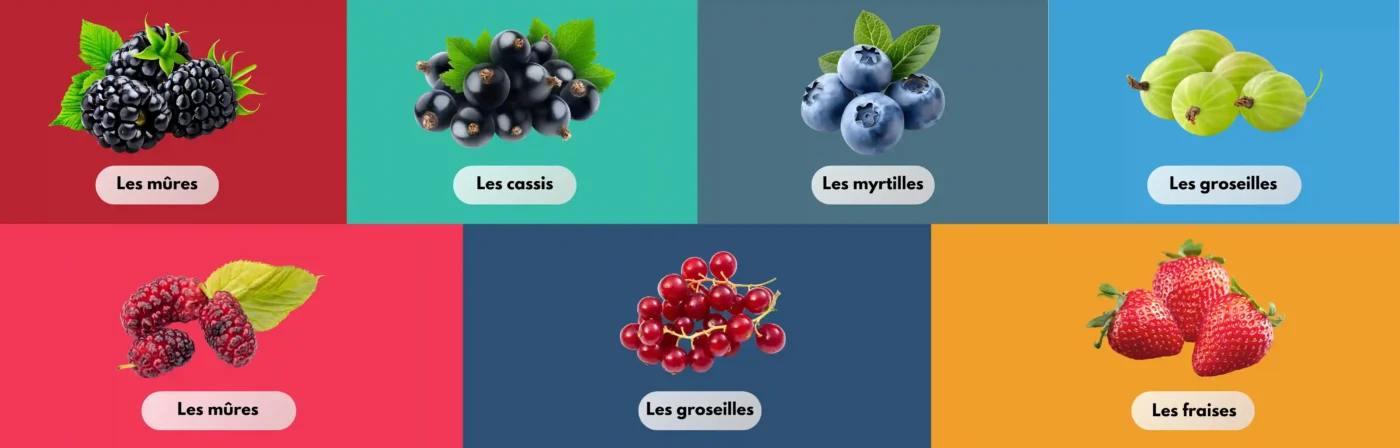
Farmers and gardeners across the country grow berries and soft fruits, staples of French cooking. This varied category includes blackberries, blackcurrants, blueberries, gooseberries, mulberries, raspberries, redcurrants, and strawberries. Highly valued as components in sweets, jams, pastries, and other baked goods because of their juicy sweetness and vivid colours. These fruits are known for their adaptability, allowing them to excel in both savoury and sweet recipes.
| French | English Translation | Pronunciation |
|---|---|---|
| Les mûres | Blackberries | /myʁ/ (myr) |
| Les cassis | Blackcurrants | /ka.si/ (kah-see) |
| Les myrtilles | Blueberries | /miʁ.tij/ (meer-teej) |
| Les groseilles | Gooseberries | /ɡʁɔ.zɛj a ma.kʁo/ (groh-zay ah mah-kroh) |
| Les mûres | Mulberries | /myʁ/ (myr) |
| Les framboises | Raspberries | /fʁɑ̃.bwa.z/ (frahm-bwahz) |
| Les groseilles | Redcurrants | /ɡʁɔ.zɛj ʁuʒ/ (groh-zay) |
| Les fraises | Strawberries | /fʁɛz/ (frehz) |
| Les raisins | Grapes | /ʁɛ.zɛ̃/ (reh-zanh) |
Exotic Fruits in French – Les Fruits Exotiques
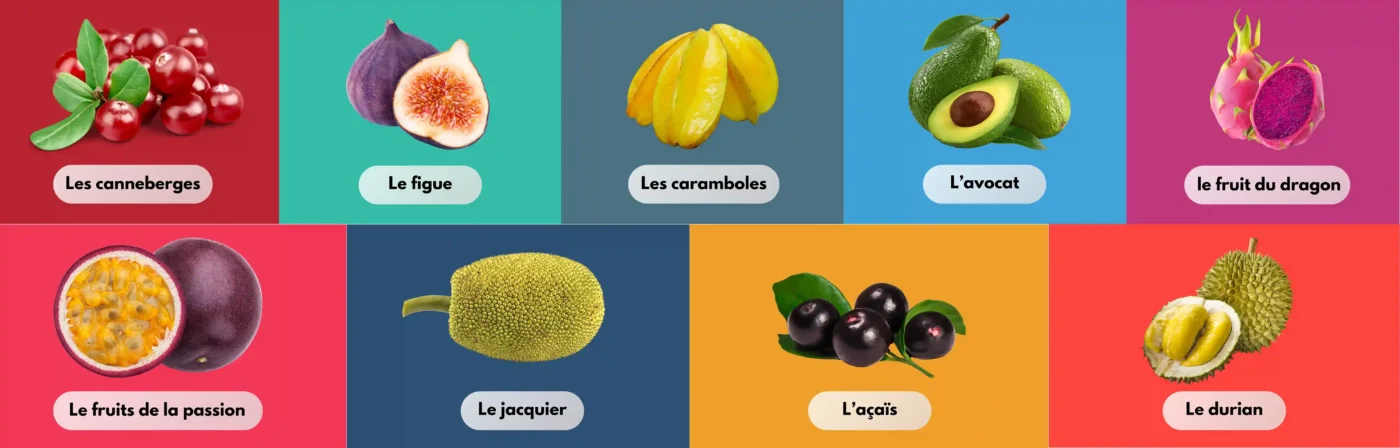
Exotic fruits, with their unique tastes and textures, originate from the far reaches of the world. Figs provide sweetness, while cranberries deliver a sharp punch. Kiwis add a tart touch, and grapes provide juicy bursts. The layers of complexity added by melons, pineapples, pomegranates, avocados, and star fruits enhance the colourful tapestry of French cuisine.
| French | English Translation | Pronunciation |
|---|---|---|
| Les canneberges | Cranberries | /ka.nə.bʁɛʁʒ/ (kah-nuh-brehrz) |
| Le figue | Fig | /fiɡ/ (feeg) |
| Les caramboles | Star fruits | /ka.ʁɑ̃.bɔl/ (kah-rahn-bohl) |
| L’avocat | Avocado | /a.vɔ.ka.do/ (ah-voh-kah-doh) |
| Les pitayas / le fruit du dragon | Dragonfruit | /pi.ta.ja/ (pee-tah-yah) |
| Le fruits de la passion | Passion fruit | /fʁɥi də la pa.sjɔ̃/ (frwee duh lah pah-syon) |
| Le jacquier | Jackfruit | /ʒak.fʁɥi/ (zhak-fryee) |
| L’açaïs | Acai | /əˈsaɪ.iː/ (uh-sigh-EE) |
| Le durian | Durian | /ˈdʊəriən/ (DOO-ree-ən) |
Enjoy the wonders of nature using the extensive vocabulary list of Flower Names in French and increase your French vocabulary to 50+.
Tropical Fruits in French – Les Fruits Tropicaux
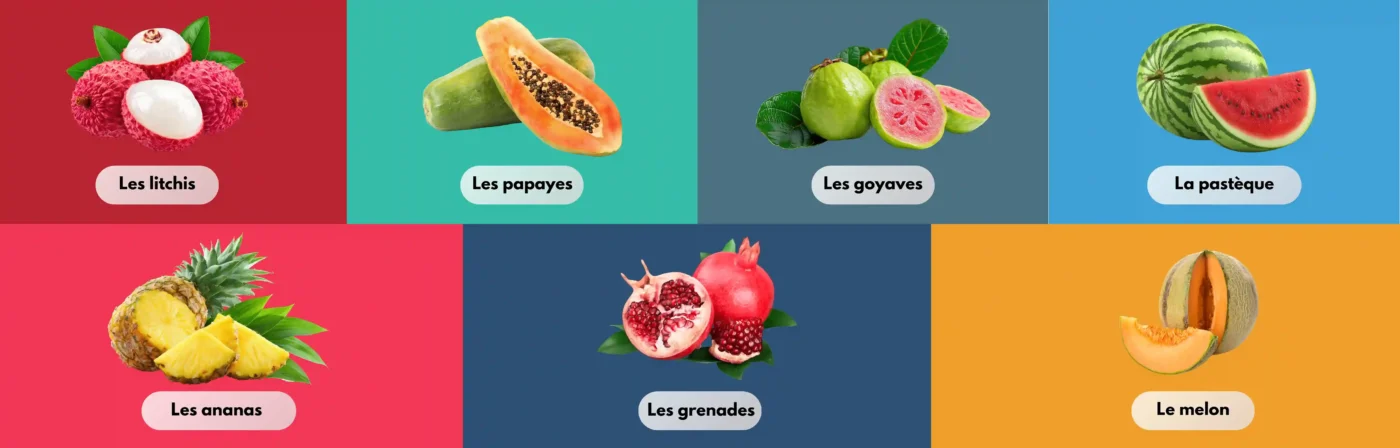
Tropical fruits bestow an enticing charm on French cuisine, prized gems of the abundant natural world that whisk diners away to distant tropical paradises. The senses are enticed by the vivid colours of dragon fruit and the potent scent of passion fruit. The culinary landscape receives contributions of richness and elegance from the meaty texture of jackfruit and the delicate floral notes of lychee.
| French | English Translation | Pronunciation |
|---|---|---|
| Les litchis | Lychees | /li.ʃi/ (lee-shee) |
| Les papayes | Papayas | /pa.pa.j/ (pah-pah-yuh) |
| Les goyaves | Guavas | /ɡwa.va/ (gwah-vah) |
| Les bananes | Bananas | /ba.nan/ (bah-nahn) |
| La pastèque | Watermelon | /pa.stɛk/ (pah-stek) |
| Les ananas | Pineapples | /a.na.nas/ (ah-nah-nahs) |
| Les grenades | Pomegranates | /ɡʁə.nad/ (gre-nad) |
| Le melon | Melon | /mə.lɔ̃/ (meh-lon) |
How Do You Pronounce Fruit Names in French?
In order to learn French pronunciation of Fruit Names correctly there are three important things that one must focus on : the vowel, the precision and the rhythmic flow. This article provides clear phonetic breakdown to help you practice fruit names and speak with confidence. By following these simplified transcriptions, you can bridge the gap between the spelling and the sound, ensuring they are understood in any restaurant or market in France.
What Are Silent Letters and Nasal Vowels?
French pronunciation is well known for silent ending consonants and nasal vowels, which occur when a vowel sound is followed by the letters ‘n’ or ‘m’. For instance, in un abricot and un avocat the “t” is never spoken. Nasal sounds are the the key feature in le raisin and le pamplemousse, where the air vibrates though one’s nose and through the mouth. Moreover, the ‘s’ in l’ananas is an exception where the final letter is actually pronounced.
What Are the Common Mistakes with Fruits in French?
The errors that we generally commit is using the English phonetics rules while pronouncing the French language. Some of the common errors include incorrect pronunciation of silent ending words or mixing up the gender of nouns with articles.
How Do Gender Mix-Ups Happen with French Fruit Names?
Gender mix-up happens when one tries and applies their own logic to French nouns, which are strictly masculine or feminine. By using the wrong article the grammatical harmony of the sentence changes. For example, referring to “Le pomme” instead of “La pomme” and “La citron” instead of “Le citron” are just one type of error that is done quite frequently. In the same manner, forgetting that “L’abricot” is masculine while “L’orange” is feminine results into making mistakes when putting adjectives to nouns.False Friends and Regional Differences in French Fruit Vocabulary?
“False Friends?” – words that look like English words but have a completely different meaning than in English. A classic example of “La grappe” which means a bunch (like grapes), but not the fruit “grape” itself which is “Le raisin”.
Regional Variations – although in most of the cases “La pastèque” means watermelon, there are also other ways in which they may be referred such as “Le melon d’eau”. Again, whereas “La châtaigne” and “le marron” are both chestnuts, they are not interchangeably used as they depend on whether the chestnut is wild or cultivated.
How to Buy Fruits in France in Real Life?
Going to the French marché is a cultural activity since it demands much more than language skills. You have to know the etiquette required when going to the market. This involves learning how to shop in a French marché. To truly master these interactions and gain confidence, book a class at La Forêt French Class!
Buying Fruits in French at a Store or Market
The interaction while shopping at a French marché is just as significant as the products. The first thing to do while shopping is greet the vendor by saying “Bonjour” and then “Je voudrais…”. Usually, you do not need to pick your fruit as the vendor will select the best fruits for you. However, do specify the quantities in either kilos or numbers, for example “un kilo de pommes” or “trois pêches”. And then, finally pay and finish with “Merci, bonne journée !”.
Frequently Asked Questions
Q1: What are the famous fruits of France?
Ans: French celebrates the famous fruits of France, with each fruit associated with a particular region and appreciated for its unique taste. Renowned varieties include sweet apples from Normandy, rich cherries from Céret, and luscious strawberries from Plougastel. The variety of French fruits evidences the nation’s long history of agriculture.
Q2: What is French Berry?
Ans: Home cooks and chefs alike highly prize French berries for their potent flavors and culinary adaptability, with two well-known varieties being fraises des bois (wild strawberries) and myrtilles (blueberries). These berries are highly sought after for their ability to enhance any meal.
Q3: Do the French eat a lot of fruit?
Ans: French tradition deeply ingrains the consumption of fresh fruit, with fruits commonly included in meals or enjoyed as snacks. Fruits play an essential role in French culture and cuisine. Whether one is enjoying a dish of mixed berries for dessert or a juicy peach for breakfast.
Q4: What is the fruit region of France?
Ans: France’s fruit regions offer an abundance of flavors to savor. Several regions are renowned for specific fruits, each with distinctive types and flavor characteristics. The Loire Valley, for instance, is renowned for its delicious apples, while Provence is known for its juicy peaches.
Q5: What are common fruits in France?
Ans: France possesses a vast selection of seasonal fruits. The popular fruits include apples from Normandy, peaches from Provence, and apricots, while some of the famous berries include fraises des bois. Other fruits such as pears, plums, and grapes still hold a prominent position in French cuisine.
Q6. How do I remember the gender of French fruit nouns?
Ans: The majority of French fruits that end in -e are feminine (la pomme, la banane), and those ending in consonants are masculine (le citron, le raisin). Note the exceptions (le pamplemousse), and keep in mind that most fruit trees (le pommier) are masculine.
Q7. Are there any French idioms or expressions with fruit names?
Ans: Yes, bien sûr. The French also use fruit idioms like “ramener sa fraise,” which means to butt in, “avoir la pêche,” which indicates that one is full of energy, and “les carottes sont cuites,” which means the game is up or it’s all over.
Q8. What can I do to remember fruit names and expand my vocabulary in French?
Ans: If you want to build your vocabulary, try the association of images by labeling your fruits at home. You could group them according to their gender and seasons and practice by playing with flashcard apps and reading French recipes.